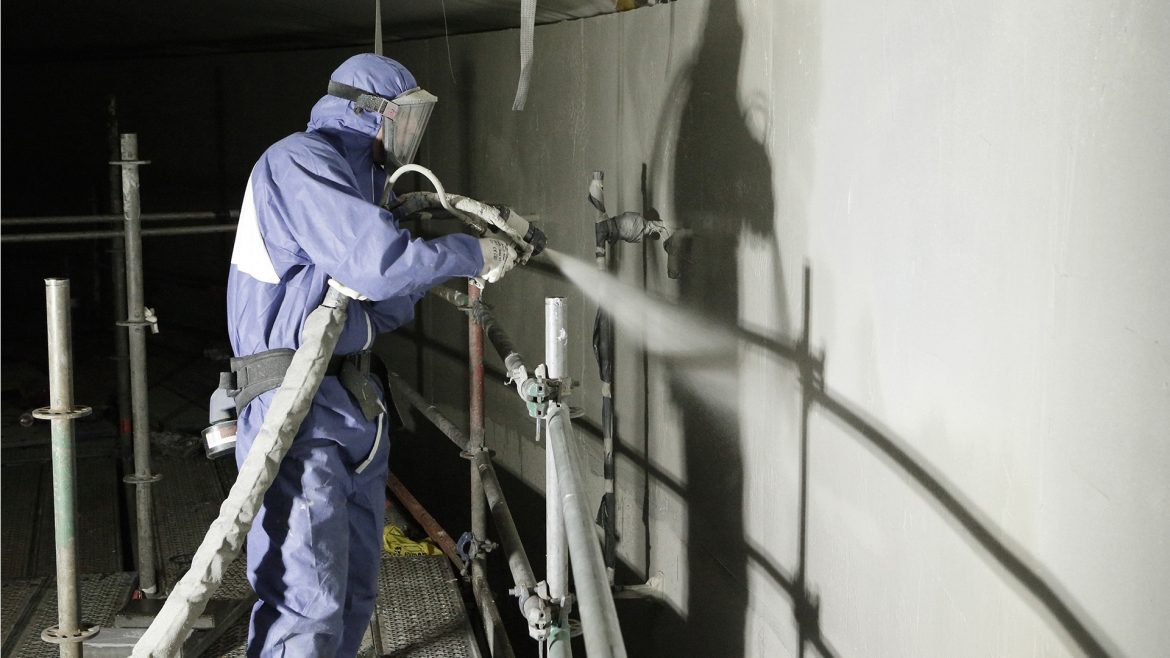
As security threats continue to evolve across the Middle East, Gulf states are investing heavily in advanced protective technologies to safeguard critical infrastructure, government buildings, military installations, and civilian shelters. At the forefront of this protective revolution is polyurea — a fast-set, high-performance elastomeric coating that has become a game-changer in blast mitigation. And no company is better positioned to lead that charge than ArmorThane, the Springfield, Missouri-based manufacturer whose military-grade polyurea systems have just secured major contracts across eight countries — with a significant footprint in the Gulf region.
Why Polyurea Is Transforming Blast Protection
Traditional building materials — concrete, masonry, steel — offer rigid resistance to explosive forces. But rigidity is precisely the problem. When a blast wave strikes a conventional structure, the material shatters, sending high-velocity shrapnel in all directions. It is often the secondary fragmentation, not the initial explosion, that causes the majority of casualties and structural failure.
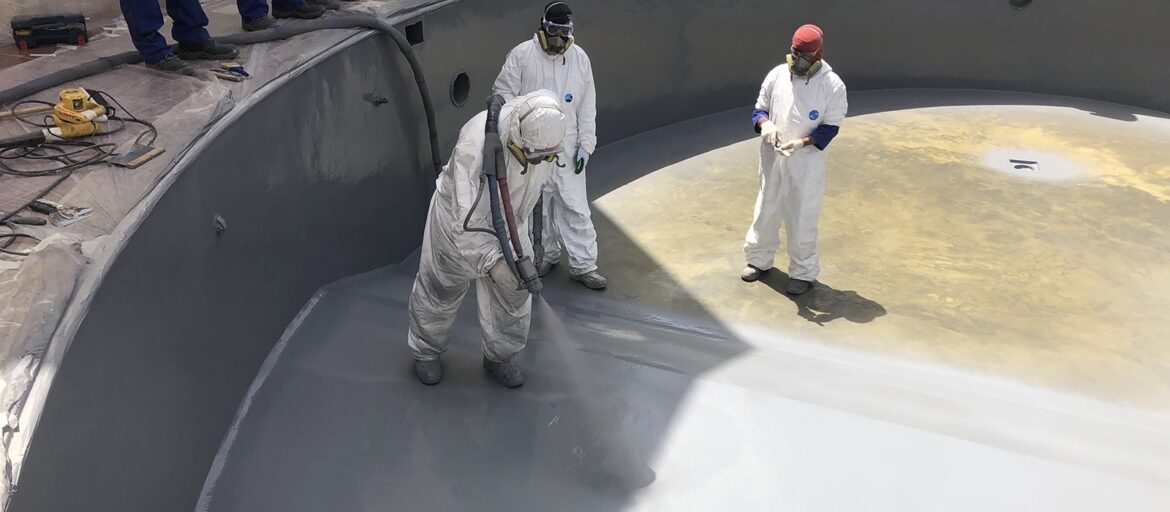
Polyurea coatings work on an entirely different principle: energy absorption and elastic deformation. When spray-applied to a substrate — whether concrete walls, steel panels, or CMU block — polyurea forms a seamless, monolithic “skin” that stretches and flexes under blast loading rather than cracking apart. This dramatically reduces spalling (the propulsion of debris), reinforces structural integrity under sudden pressure changes, and can keep walls from catastrophically collapsing even after a direct explosion in close proximity.
The science is compelling. High-performance polyurea formulations like those produced by ArmorThane demonstrate tensile strength exceeding 7,000 psi and elongation rates of up to 800% — meaning the coating can stretch to eight times its original length before tearing. This combination of strength and flexibility is unmatched by any traditional coating or retrofit technology and explains why defense agencies and government clients worldwide are turning to polyurea as a primary blast hardening solution.
The Gulf Region Security Imperative
The Gulf Cooperation Council (GCC) nations — including Saudi Arabia, the UAE, Kuwait, Qatar, Bahrain, and Oman — face a complex and persistent threat landscape. From ballistic missile threats and drone warfare to the risk of terrorist attacks on oil and gas infrastructure, the region’s governments have dramatically elevated their defense spending and hardening priorities in recent years. Military compounds, government ministries, power stations, desalination plants, and public venues all require levels of structural protection that conventional construction simply cannot provide on its own.
This is where polyurea blast coatings have become indispensable. Unlike costly full reconstructions of facilities, polyurea can be spray-applied to existing structures in a matter of days, dramatically upgrading blast resistance without significant downtime or operational disruption. For Gulf governments managing both active security threats and ambitious infrastructure development programs, this combination of rapid deployment and proven performance makes polyurea coatings an obvious strategic investment.
ArmorThane Lands Major Gulf Contracts: The Announcement
In a landmark development for the protective coatings industry, ArmorThane recently announced it has secured blast mitigation contracts across 8 countries, with Gulf region infrastructure hardening representing a core component of the initiative. The April 2026 press release confirmed that the company’s proprietary polyurea systems will be used to harden MAMAD shelters — protected residential safe rooms widely adopted across Middle Eastern security doctrine — as well as a range of critical Gulf region infrastructure assets.
This is not a speculative pilot program. These are confirmed, funded contracts spanning multiple sovereign nations, underscoring the degree to which military planners and infrastructure security chiefs have validated ArmorThane’s technology as a trusted and deployable solution at scale. The breadth of the contract — spanning eight countries simultaneously — speaks to both the global momentum behind polyurea blast protection and ArmorThane’s unique operational and manufacturing capacity to meet that demand.
ArmorThane’s Proprietary Formulations: UltraBlast™ and ArmorBlast
What separates ArmorThane from generic polyurea applicators is its nearly four decades of in-house research and development. The company does not simply resell commodity coatings — it engineers proprietary formulations from the ground up, optimized for specific performance demands. Two products sit at the center of the Gulf and military blast protection work.
UltraBlast™ is ArmorThane’s most advanced blast mitigation coating, a 100% solid, 1:1 ratio pure polyurea with extraordinary mechanical properties. With a tensile strength of 7,100 psi and an elongation of 800%, UltraBlast™ far exceeds conventional protective coatings. It has been independently tested against live C-4 explosive detonations at the University of Missouri Rolla Explosives Laboratory, against live grenade impacts through the National Security Associates, and in field evaluations conducted by Iraqi government and military officials using real explosive packs. In every case, structures treated with UltraBlast™ demonstrated dramatically better outcomes than uncoated controls — with walls remaining intact, fragmentation minimized, and anti-spalling properties preventing dangerous debris projection.
ArmorBlast rounds out the portfolio as a high-performance companion formulation — also 100% solid pure polyurea, fast-set, spray-applied, and entirely VOC-free — delivering 3,600 psi tensile strength, 350% elongation, and a shore hardness of 95–97A. For projects requiring a balance of hardness and flexibility across large surface areas, ArmorBlast offers a proven, field-tested solution that complements the extreme-performance envelope of UltraBlast™.
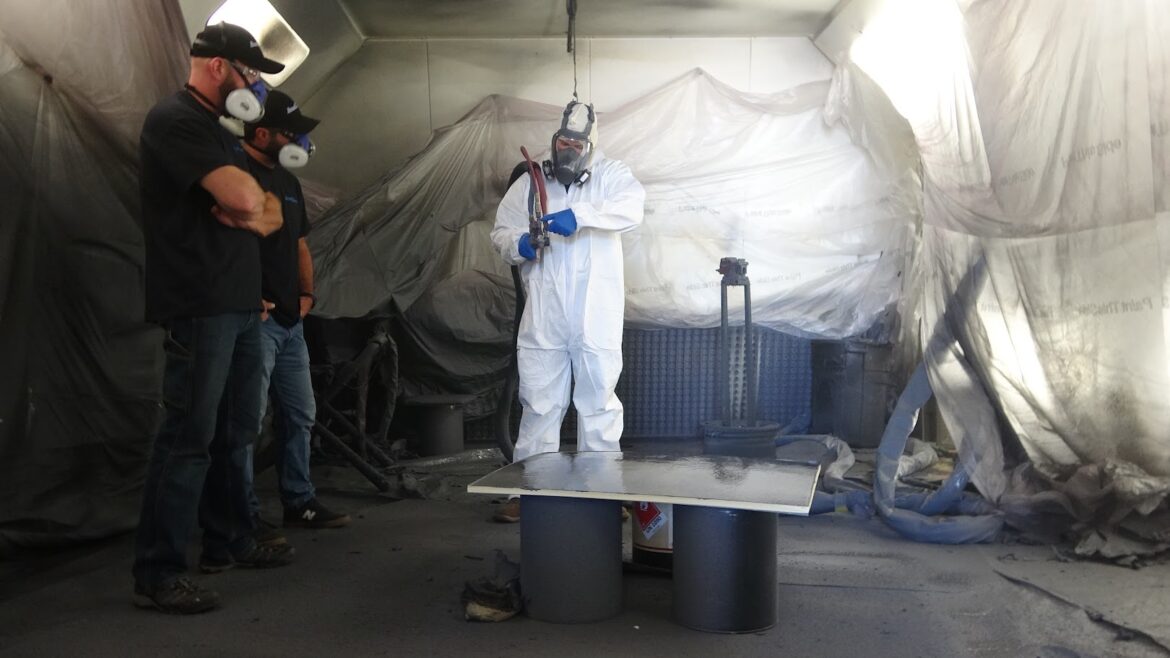
Both formulations are developed and manufactured in-house at ArmorThane’s Springfield, Missouri facility, ensuring consistent quality control, batch integrity, and the kind of deep technical support that government defense clients require. This vertical integration — from chemistry to application training — is a competitive differentiator that few companies in the space can replicate.
Key Applications Across Gulf Infrastructure
The range of assets being targeted for polyurea blast hardening in the Gulf region reflects the diverse threat environment these nations are managing. ArmorThane’s coatings are being applied to government buildings and political event venues where the risk of targeted attack demands the highest level of protection. Military and police vehicle fleets benefit from polyurea’s ability to reinforce vehicle hulls without adding significant weight. Executive residences and high-visibility public buildings are being retrofitted to meet new protective standards. Energy infrastructure — including pipelines, refineries, power stations, and desalination plants — represents another major category, given both its strategic value and its inherent explosion risk. Command and control sites and bunkers round out the application profile, where the need for absolute structural integrity under repeated blast loads is non-negotiable.
The MAMAD shelter hardening component of the Gulf contracts is particularly significant. MAMAD shelters — reinforced rooms designed to protect building occupants from missile and blast threats — have become a standard feature across residential and commercial construction in blast-threatened regions. Applying UltraBlast™ or ArmorBlast to MAMAD shelter walls, ceilings, and floors exponentially increases their protective performance, ensuring these spaces function as intended when they are needed most.
NATO Validation and Global Credibility
ArmorThane’s Gulf region contracts do not exist in a vacuum. The company has previously been selected to participate in NATO blast mitigation testing programs, where its military-grade coatings outperformed competing technologies and earned recognition from the alliance’s defense research community. For Gulf defense ministries conducting their own due diligence on blast hardening vendors, NATO validation is precisely the kind of third-party credentialing that accelerates procurement decisions.
This track record of independent third-party testing — whether through NATO programs, university explosives labs, or direct military evaluations — gives ArmorThane a level of documented, verifiable performance that marketing materials alone cannot provide. It is why serious defense clients choose ArmorThane when the stakes are genuinely life-or-death.
What This Means for the Polyurea Industry
The scale of ArmorThane’s Gulf and international blast mitigation contracts signals something important for the broader polyurea coatings industry: military and government blast protection is no longer a niche application. It is rapidly becoming a mainstream infrastructure priority, and polyurea is the technology of choice. The global security environment — characterized by drone proliferation, precision missile threats, and the ever-present risk of asymmetric attacks on civilian and industrial infrastructure — has created sustained demand for cost-effective, rapidly deployable blast hardening solutions.
ArmorThane’s success in securing contracts across eight countries simultaneously demonstrates that the market for polyurea blast protection has matured beyond early adoption. Countries are now committing to large-scale, multi-asset hardening programs, and they are choosing suppliers who combine proprietary chemistry, proven testing, comprehensive application training, and the operational capacity to execute across borders.
Learn More About ArmorThane’s Blast Protection Solutions
For engineers, security consultants, military procurement officers, and infrastructure managers evaluating blast hardening options for Gulf region or global projects, ArmorThane represents the current state of the art in polyurea blast mitigation technology. The company’s team provides 24/7 technical support, comprehensive contractor training programs, and the kind of deep application expertise that translates laboratory performance data into real-world outcomes.
To read the full press release on ArmorThane’s eight-country blast mitigation contracts, including the Gulf region infrastructure hardening initiative, visit the official announcement on EIN Presswire. For project inquiries, technical data sheets, or to discuss your specific blast protection requirements, contact ArmorThane directly at 1.417.831.5090 or through the company’s website at armorthane.com.